TRAINING ON AAROGYA MAITRI/BHISHM CUBE MOBILE HOSPITAL SYSTEM CONDUCTED AT SLAF BASE KATUNAYAKE
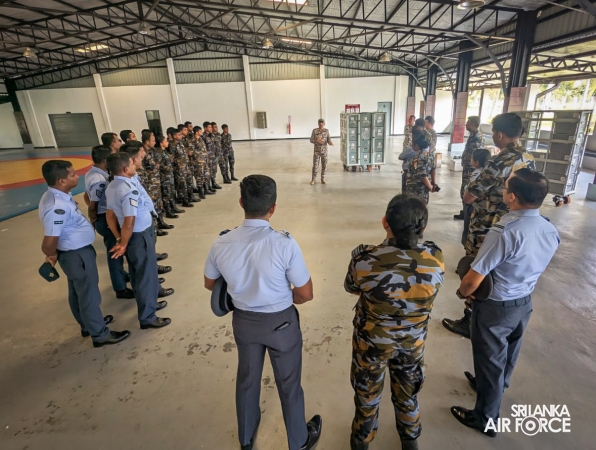
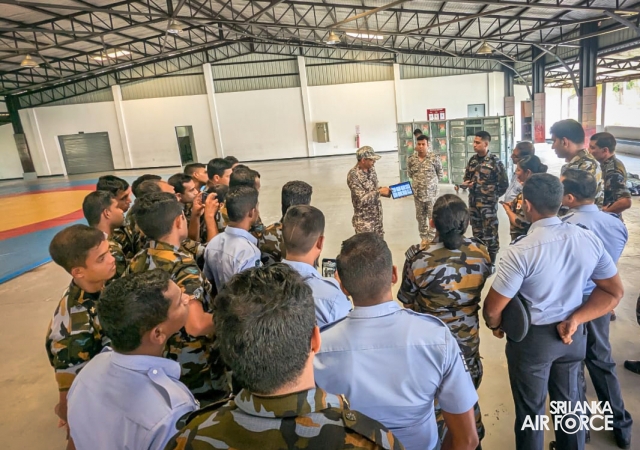
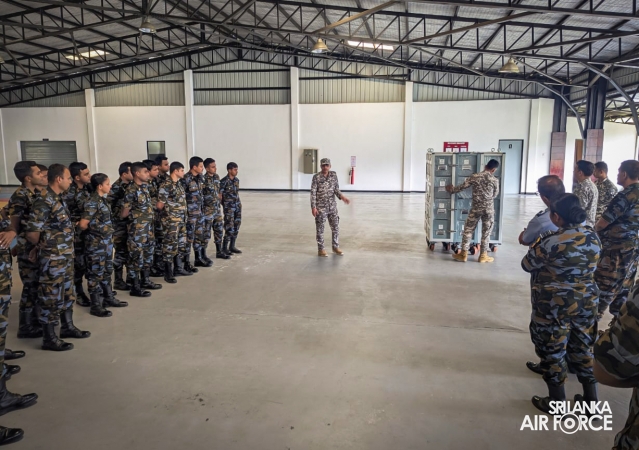
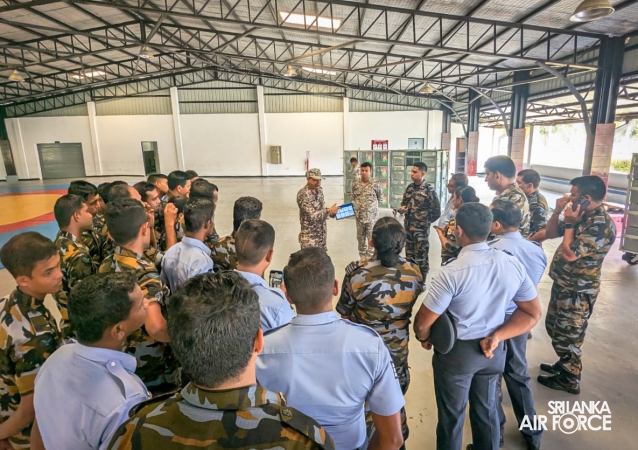
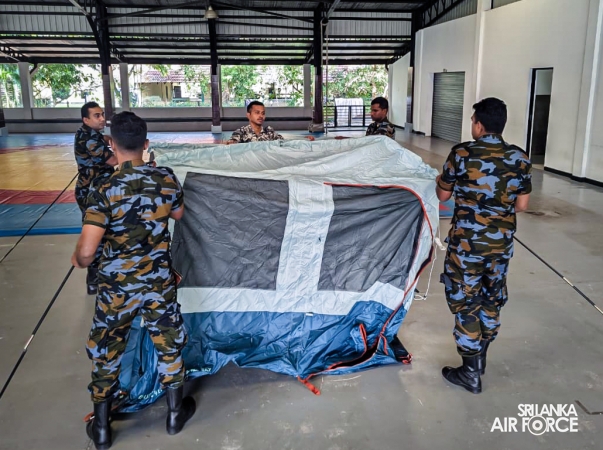
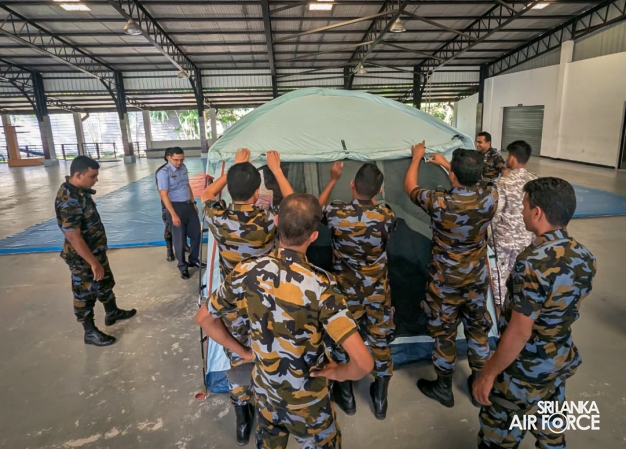
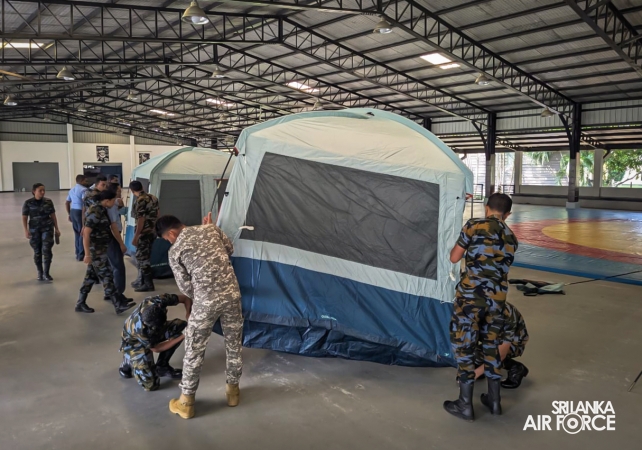
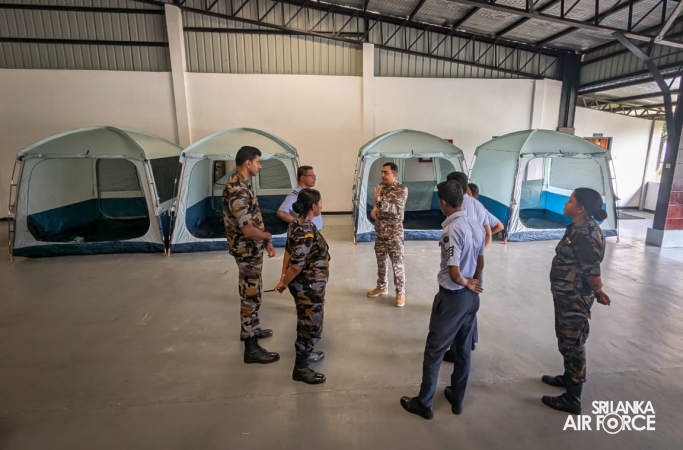
A specialized training session on the advanced Aarogya Maitri/BHISHM (Bharat Health Initiative for Sahyog, Hita and Maitri) Cube mobile hospital system was conducted today (01 December 2025) at SLAF Base Katunayake for SLAF medical personnel. The session was led by the visiting Indian Air Force (IAF) Medical Team, following the recent arrival of the BHISHM Cube units in Sri Lanka to support ongoing humanitarian and disaster-relief efforts.
The Aarogya Maitri/BHISHM Cube is a revolutionary mobile hospital facility developed by India to provide rapid emergency medical care in conflict zones and disaster-affected regions. Designed for efficiency and mobility, the system consists of 72 compact cubes, each weighing approximately 15kg and equipped with critical medical equipment and supplies.
During the training, SLAF medical officers and nursing staff were briefed on the Cube’s key capabilities, including its rapid deployment design and operational readiness. The system is engineered to manage up to 200 emergency medical cases, addressing trauma, burns, fractures, shock and other urgent conditions. It also supports the performance of 10–15 basic surgical procedures per day.
Participants were additionally trained on the Cube’s self-sustaining features, such as its built-in power generation and oxygen supply modules designed for short-term operations in remote or disaster-stricken areas. The use of RFID (Radio Frequency Identification) -based inventory management and digital support systems capable of functioning in 180 languages was also demonstrated, highlighting the technological sophistication of this mobile medical unit.
The Aarogya Maitri/BHISHM Cube is a revolutionary mobile hospital facility developed by India to provide rapid emergency medical care in conflict zones and disaster-affected regions. Designed for efficiency and mobility, the system consists of 72 compact cubes, each weighing approximately 15kg and equipped with critical medical equipment and supplies.
During the training, SLAF medical officers and nursing staff were briefed on the Cube’s key capabilities, including its rapid deployment design and operational readiness. The system is engineered to manage up to 200 emergency medical cases, addressing trauma, burns, fractures, shock and other urgent conditions. It also supports the performance of 10–15 basic surgical procedures per day.
Participants were additionally trained on the Cube’s self-sustaining features, such as its built-in power generation and oxygen supply modules designed for short-term operations in remote or disaster-stricken areas. The use of RFID (Radio Frequency Identification) -based inventory management and digital support systems capable of functioning in 180 languages was also demonstrated, highlighting the technological sophistication of this mobile medical unit.